Graph RAG: How Knowledge Graphs Are Redefining Accuracy in Generative AI
AI - Artificial Intelligence


June, 2026
The adoption of Generative AI within organizations is often hindered by persistent hallucinations and limited information retrieval. While Retrieval-Augmented Generation (RAG) solutions improved accuracy for standard model use cases by supplying semantic context to prompts via the retrieval of external documents, retrieving information from vector-only models often misses key relationships dispersed throughout discrete datasets.
By integrating knowledge graphs with traditional retrieval methods’ semantic search capabilities, enterprises can generate enterprise questions.
The Accuracy Problem Holding GenAI Back
Large Language Model (LLM)-based generative AI systems are among the most sophisticated pattern-matching services available. However, because LLMs lack factual truth or enterprise-relevant business logic, developing trust in any resulting answer will be difficult. Failure to address the precision deficit facing GenAI’s utilization will severely inhibit its progress from prototype/system testing mode to production across enterprises.
What Are AI Hallucinations and Why Do They Matter?
AI hallucinations occur when a model produces an answer that sounds plausible but is factually incorrect, unsupported by retrieved evidence, or inconsistent with enterprise knowledge. An example would be producing an ingredient for a recipe in a consumer application; however, producing inaccurate compliance policies for a business that has employed generative AI creates risks to operational parcels and to the overall reputation of the business. Subsequently, no generative AI model can be deployed at scale until there exists a mechanism in place that provides deterministic boundaries for factual accuracy and tracks the origin of generated answers.
Why Standard RAG Can Fall Short in Enterprise Environments
The design of Standard RAG models relies heavily on using vector databases that provide retrieval of text chunks based on the similarity of their respective semantically consistent words. While RAG has provided substantial value for simple queries utilizing a single document (for example: “What is our remote work policy?”), The efficiency of executing complex queries that require synthesizing multiple documents, entities, or historical contexts will be limited by the absence of explicit, direct factual relationships among retrieved documents, entities, or both.
If, for example, a business were to create a query asking, “Which of our European suppliers will be impacted by the recent strike affecting ports throughout Europe?” A vector search would return 3 distinct documents on Europe, suppliers, and ports; however, it would fail to provide sufficient context for the user to accurately answer the query, given the understanding of how the various entities relate to one another through multi-tier supplier relationships. Furthermore, the presence of similar-sounding words means nothing for establishing relationships or providing structure to facts.
Read more: The Future of Decision Intelligence in the Age of Generative AI
What is Graph RAG?
Graph RAG provides incremental structure to RAG algorithms, so that, instead of using separate unstructured pieces of text for retrieval, the updated algorithm pulls together related facts and previously associated semantic structures. Therefore, Graph RAG fundamentally transforms the retrieval process from generating “what sounds the same” to generating “what is specifically connected”.
How Traditional RAG Works
Retrieval-Augmented Generation works by splitting one or more documents into smaller pieces called chunks, converting the chunks into numerical representations called embedded vectors (or embeddings), and storing those embedded vectors in a vector database. When a user submits a prompt, the RAG system compares the query with stored embeddings and retrieves the most relevant chunks. The selected text chunks are then submitted back to the LLM to generate the response. While RAG models have traditionally performed effectively, they also treat each piece of information separately (worldwide) as if it were the sole relevant piece used to generate the response.
Where Knowledge Graphs Come In
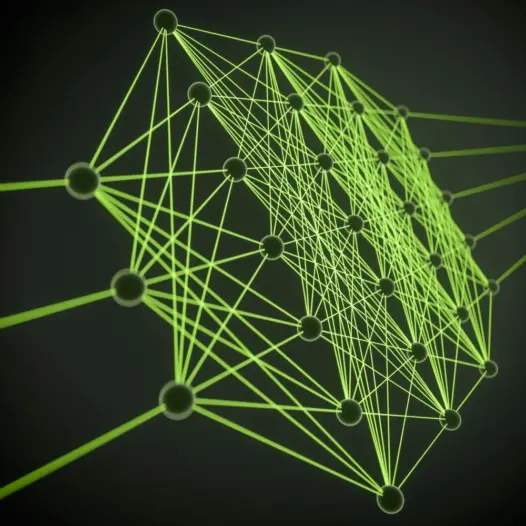
Knowledge Graphs provide a framework for categorizing data through networks of relationships between nodes, rather than a flat listing of records in an unstructured format. Nodes represent entities, such as people, products, businesses, etc., while edges describe the types of relationships that exist between those respective nodes (for example, “Company A [Node] –>Purchased [Edge]–> Company B [Node] “). These structures allow for explicit reference to facts, and, as such, Knowledge Graphs will eventually provide a web of machine-readable enterprise definitional standards or business logic that will govern how any number of previously disconnected entities will interact within an enterprise.
How Graph RAG Combines the Best of Both
Graph RAG incorporates both methodologies (Knowledge Graph and Graph Structure) to enhance retrieval and reasoning. Microsoft’s GraphRAG framework is one prominent open-source implementation of graph-based retrieval. This describes itself as a set of methodologies for developing graph-based generative AI solutions that leverage graph relationships to deliver more contextually relevant answers.
When an enterprise uses the Graph RAG methodology, it retrieves both semantically relevant entities and all explicitly associated nodes by traversing the graph. By utilizing both structured entity information and graph-based structure, Graph RAG-related entities provide the LLM with a comprehensive context map of relationships. Compared to a typical Retrieval Model, which seeks passages of similar length to find related passages, the Graph RAG concept identifies how relevant entities, relationships, and facts connect. Furthermore, the Graph-RAG process enables multi-hop reasoning to generate responses that typical RAG models would be unable to assemble structurally.
Read more: RAG vs. Fine-Tuning: Which AI Approach Actually Works for Enterprise Data?
Knowledge Graphs vs. Vector Databases: What is the Difference?
To develop a successful generative AI architecture, enterprise technology teams need to understand the fundamental differences between vector- and graph-based data storage. The mathematical and structural basis of each system is vastly different.
Strengths and Limitations of Each Approach
Vector databases create dense numerical arrays of unstructured text data, known as “embedding”, and organize this data based on semantic similarity. Vector databases can handle large amounts of raw data and conduct speedy searches based on semantic similarity. However, vector databases cannot infer relationships between concepts; they can only indicate that two concepts are semantically linked.
Knowledge graphs, on the other hand, explicitly describe relationships between entities through the use of an ontology consisting of nodes and typed edges. Knowledge graphs can achieve a level of precision and verifiability that is not attainable with vector-based databases. From their inception, the primary limitations of knowledge graphs were the extensive data preprocessing and the considerable computational overhead of indexing and understanding the relationships among entities. As of 2026, with the availability of smaller, more efficient models, this limitation on producing knowledge graphs at scale has greatly diminished, making it feasible to implement knowledge graphs at scale in enterprises.
Why Relationships Between Data Points Matter for Accuracy
To summarize the key differences between vector and graph approaches: vector databases query data based on semantic similarity; knowledge graphs provide a means of querying data based on defined relationships.
Graph RAG is especially useful when it is critical to know how the various facts relate to one another, as well as what the facts are. For example, if an organization queries an internal database for information on compliance with corporate laws, a vector database will return text snippets that use relevant terms based on their semantic similarity. A knowledge graph, however, would establish the specific relationships among the entities in question and their dependencies before returning results. By combining vector and graph approaches, organizations can use vector to identify entry points into their structure, then graph to clarify the exact relationships between the entry point(s).
How Graph RAG Reduces Hallucinations in GenAI Outputs
No retrievable information retrieval architecture will completely eliminate hallucinations from a model’s output. However, by introducing Graph RAG, we can reduce the incidence of hallucination by providing structured context for all responses that are based solely on unsubstantiated, probabilistically generated linguistic predictions.
Traversing Entity Relationships for Contextual Precision
In situations where an enterprise needs a response based on multiple entities—meaning the answer will be directly affected by cascading factual evidence—a traditional information retrieval architecture typically reaches its limits. Graph RAG addresses this limitation by allowing the information retrieval mechanism to trace the relationships between entities in the knowledge graph. The retriever will follow the graph’s format to identify the information records of the retrieved entities using the associated edges, and will bring together the full contextual history of each entity before providing the data to the generative language model.
Real-World Example: Graph RAG in Action
For example, if an international logistics provider wanted to manage its maritime shipping operation’s exposure to an executive in operations asked the provider’s network system (using the auto query capabilities designed into the Graph RAG system) the question “What shipments are impacted by the Customs delays at Port X,” a standard Graph RAG system would return separate passages that included “Port X”, “Customs,” and “Shipments.”
Graph RAG systems combined with enterprise software (e.g., Neo4j) and Vector indexes would operate differently. The system would first resolve the semantic search to the node for “Port X” and then traverse all of the typed edges (AFFECTS > SHIPMENT_Y > CONTAINS > PART_Z) associated with that node, returning an explicit multi-hop context stack to the generative language model. This means the generative language model will be able to provide a precise list of affected shipments, along with the exact set of structures used to generate the answer. Therefore, this combination of the two approaches enables transforming the typical quasi-random guessing process used in traditional methods into reliable, auditable graph-driven reasoning.
Key Industries Benefiting from Graph RAG
The use of Graph RAG is yielding greater return on investment when utilized within the data and information-rich sectors.
Financial Services
Banks and other financial institutions leverage the power of Graph RAG. In the financial services environment, Graph RAG is responsible for creating comprehensive Customer 360 profiles that provide users with accurate insights into the diverse asset portfolio of a particular Commercial Banking Institution by quickly linking the many disparate asset classes to the appropriate Commercial Banking Business Unit.
Healthcare & Life Science
In Healthcare & Life Science environments, including those engaged in Clinical Decision Support and Drug Discovery, the accuracy of the data supporting the decision(s) is absolutely critical. Graph RAG is the primary technology enabling medical assistants to develop highly accurate visual representations of Complex Patient Pathways, Drug-to-Drug Interaction Network(s), and Clinical Trial Results (outcomes).
Retail & Consumer Packaged Goods
Retail Supply Chain(s) leverage the Graph Network capability to track and manage Multitude-tiered Vendor-Dependent Requirements, Inventory Planning logic, and Predictive Demand modeling. Graph RAG allows Supply Chain Operations to track a multitude of variables.
Technology / Enterprise
Multiple Enterprise Applications leverage Graph-based Retrieval Solutions to ‘Unbundle’ the Very Large Corporate Knowledge Bases, MicroService Software Architecture (Model), and Internal IT Operational Pipelines.
Building a Graph RAG Pipeline: What It Takes
Transitioning from a basic Vector-based Retrieval Loop to an Enterprise-grade Graph RAG Pipeline will require a stronger focus on Data Engineering Techniques & Processes used to develop, build, and produce the fundamental components of the Graph RAG Information Pipeline model/process. The Graph RAG will transition from passive ingestion (inactive) to an Active Knowledge Synthesis Suite.
Data Ingestion and Knowledge Graph Construction
The starting point of the Graph RAG Pipeline is the Ingestion Layer; which accepts Non-Structured Business Data Sets such as PDF User Manuals, Legal Contracts, and Internal Wiki Pages; and processes each individual document from a Data Set, through a systematic process; where each document’s Unstructured data content is processed within the scope of how many Licensed Users are allowed to access the data/content of those documents. Graph RAG uses a ‘token’ approach to measure usage of those documents; therefore, any and all documents processed by Graph RAG must also undergo Named Entity Recognition and Relationship/Error Extraction. This phase will frequently use a Common Language Model (CLM)-based approach to determine the nodes and edges of the Knowledge Graphs created from the Document’s Non-Structured data. It must be emphasized that only those Non-Structured Blocks of Text that can be processed according to a Predefined Graph Schema or Ontology can be validated as being ‘Correctly Structured’; Expectations are that the Graph RAG has sufficient domain knowledge to enforce the notion of Validity based upon the business rules and data construct established in the Graph Schema for the specific domain environment.
Query Layer: Connecting LLMs to Graph Data
During all Query-processing activities, when users enter their Query or Natural Language Prompt into the Graph RAG System via the Query Layer, the Natural Language Prompt must be translated into an acceptable Query format that the Knowledge Graph can interpret. The Graph RAG System uses the user-input Natural Language Prompt as the basis for creating a Structured Query Language (SQL) Statement (example: using Cypher); which will be used to retrieve the specific Subgraph(s) and/or Summary of the Community Links that relate to the user’s original Natural Language Prompt, along with concurrently executing an additional Vector-Based Search over the undeployed raw text embedded within the same set of Graphs that match that user’s Natural Language Queries.
Tools and Frameworks for Graph RAG
In designing a sophisticated RAG architecture based on traditional, supporting graph framework design and new orchestration framework technologies, enterprise architects may use a combination of:
Neo4j
A market-leading, native graph-based database with unmatched performance on real-time (low-latency, high-throughput) traversals WITH a native vector index capability. An example of the innovation now available in Neo4j is the Neo4j Virtual Graphs functionality, which allows teams to perform graph-based reasoning against previously hosted DW data without duplicating that data into a separate or new database.
Microsoft Graph RAG
An open-source, modular graph transformation platform developed by Microsoft Research that specializes in generating hierarchical community graphs from unstructured text, which can be used to produce structured summaries of a corpus.
LangChain & LlamaIndex
Two leading orchestration frameworks in the marketplace that are able to provide rich abstractions, large-scale pre-built memory models, and query translators designed to efficiently stitch together graph databases and graph language models.
Hybrid Graph-Vector Engines
Indices specifically designed for a combined relational (e.g., straw) and high-dimensional vector (e.g., graph embeddings) representation of relational database properties, thereby minimizing the infrastructure functional operational complexity.
When Graph RAG is the Right Fit
Graph RAG is the proper architectural design for organizations with a dynamic knowledge base (i.e., frequently changing) that require clear E2E traceability for all their knowledge inquiries. For example, if your organization experiences frequent changes in pricing models, compliance guidelines, vendor relationships/deployment timelines (daily/weekly).
When Fine-Tuning Makes More Sense
Fine-Tuning improves LLMs’ communication skills by developing the context of communication within the development community, and fine-tuning will help the model adapt to a wider variety of communication formats. Examples of when fine-tuning should be used include using a corporate-specific communication style (format) and correctly using specialized (domain-specific) jargon (language) during the communication process.
Can You Use Both Together?
The two architectural designs are not mutually exclusive, and high-performing enterprises now routinely implement both architectures through a hybrid approach that uses either architecture. For example, a health care organization is using a fine-tuned smaller-sized, open-source model through parameter-efficient methods such as LoRA to accurately develop specialized language/syntax related to their industry (i.e., healthcare) and runs the fine-tuned specialized LLM on top of a Graph RAG pipeline so that the LLM can generate high quality evidence outputs using a vast number of sources it has already been exposed to (i.e., the total corpus) and uses these sources as its basis of fact retrieval through the capabilities of the Graph RAG engine.
Challenges Before You Adopt Graph RAG
While Graph RAG addresses the structural blind spots of traditional semantic search-based knowledge management architectures, scaling RAG across the full organizational data landscape introduces distinct engineering challenges and potential trade-offs to your overall infrastructure.
Data Quality and Graph Maintenance
As evidenced by the “garbage in, garbage out” conceptual paradigm, which emphasizes that if garbage is supplied as input into a process, the output will always be garbage; however, this assumption takes on much more complexity in how to achieve “clean” data with respect to your Graph architecture versus a traditional, relational database architecture. If, for example, your organization has duplicated or misformatted values residing in a traditional, flat-based relational database, it is simply an operational nuisance. If, however, your organization has an equivalent “bad” record in a knowledge graph, it can create an erroneous node, which in turn creates a false edge in the semantic network and distorts the resulting graph of knowledge used to support future inferences. As a result, it is imperative to adopt an ontology-driven architecture with appropriate automated data engineering pipelines to enable continuous synchronization and maintain the accuracy of your graph.
Latency and Scalability Trade-offs
Processing interconnected nodes in massive graph databases demands significant computational power. Delays in the Graph Extraction Layer can increase inference time by 20%-40%, creating noticeable latency in the user experience. To maintain high-performance and reliable organizational knowledge, technology departments must optimize their Partition Strategies, Sub-graph Cache methods, and Asynchronous Query Prefetching.
Organizational Readiness
Implementing Graph RAG (Retrieval Augmented Generation) necessitates a sophisticated degree of data management that goes far beyond simply pulling data from an application programming interface (API). One of the primary technical challenges competitors face is entity resolution. For example, if your pipeline fails to recognize that “Acme Corp.”, “Acme Corporation”, and “Acme Inc.” are all the same company, you’ll end up with fragmented collections of disconnected sub-graphs. Incomplete entity resolution results in reduced performance for Graph RAG. As a result, the model will miss important relational connections and produce limited, incomplete summaries for the user.
How SG Analytics Helps Enterprises Implement Graph RAG
As an AI-enabled data analytics organization, SG Analytics provides services in data insights, analytics solutions, and AI-led innovations, such as our AI studio, to help modern companies competing in a rapidly changing environment grow their businesses with scalable, secure, and safe models.
Here’s how:
- GenAI Strategy: Align a company’s business goals with the technical capabilities of graph-augmented architectures based on the cost-effectiveness and practical use cases of the technologies.
- Knowledge Graph Design: Develop a structural architectural map of the ontology of a business’s particular industry, then work to establish rules for entity resolution graphs to prevent duplication.
- Data Engineering: Create automated ingestion workflows that neatly extract structured nodes and edges from unstructured text databases.
- RAG Pipeline Implementation: Set up hybrid retrieval loops that put high-dimensional vector similarity against/and combine with low-latency graph traversals.
- Model Evaluation and Governance: Introduce mathematical compliance, factual tracking, and data provenance standards within the model to ensure reduced operational risk and liability.
- Industry-Specific AI Use Cases: Tailor high-precision logical design architectures to meet the specific regulatory needs for the financial services, healthcare, retail, and technology industries.
FAQs
Graph RAG combines traditional retrieval-augmented generation (RAG) techniques with structured relationships within knowledge graphs. It enables language models to produce responses firmly tied to factual relationships verified via connected databases.
RAG Standard methods use vector-based databases to “cut out” pieces of independent text based solely on conceptual/similarity within the mathematical properties of the text, and produce extracted “mini-texts.” In contrast, Graph RAG enables the query processor to create a web of related entities and their interrelationships, enabling the system.
A knowledge graph is a structured, machine-readable representation of a company’s real-world data. A knowledge graph represents entities as nodes and relationships as edges. Thereafter, each node or edge in the knowledge graph (generated from previously produced unstructured text within the model) can be extracted from the original document and added to the new knowledge graph.
Large language models use probabilistic methods to generate model-based “Next Word” outputs. The large language model will produce outputs that may appear linguistically correct, but may not accurately reflect the facts.
Knowledge Graphs can significantly reduce the chances for AI models to produce erroneous outputs (hallucinations). Nonetheless, there remains a possibility that the model can produce erroneous reasoning or incorrect formatting due to errors at the final stage of output (e.g., during the language model’s generation phase).
Related Tags
Author
SGA Knowledge Team