AI-Powered Portfolio Monitoring: From Reporting to Predictive Insights
Portfolio Management


October, 2026
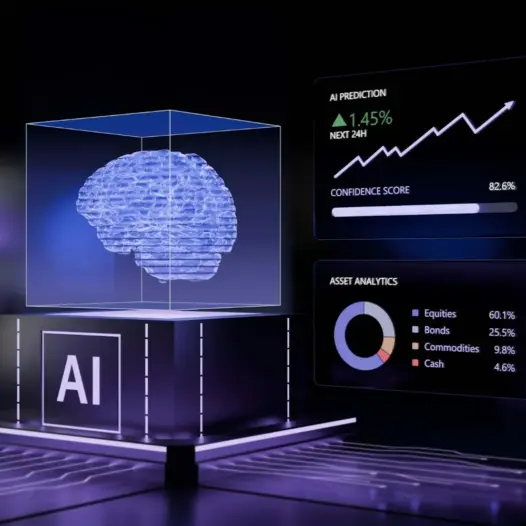
AI-powered portfolio monitoring uses AI, analytics, and automated data workflows to give private equity teams a more continuous view of portfolio company performance. Instead of waiting for monthly or quarterly reporting packs, teams can standardize data, track key metrics, detect exceptions, and surface questions for management as new information arrives.
The objective is not simply faster dashboards. AI portfolio monitoring creates a decision layer that helps the fund understand what changed, why it may have changed, what could happen next, and where operating or investment teams should focus attention.
That shift matters as PE firms place greater emphasis on operational value creation and earlier portfolio interventions. Recent industry research highlights expanding use of data, analytics, and AI across portfolio operations, while also noting that fragmented systems and inconsistent data remain practical constraints.
How Does AI Portfolio Monitoring Work?
AI-powered portfolio monitoring begins by connecting relevant portfolio data from finance, sales, operations, customer, workforce, covenant, market, and external sources. Data is standardized into a common model, then mapped to the metrics and thresholds that matter for the investment thesis.
From there, AI portfolio monitoring can automate recurring calculations, identify unusual movements, compare performance with plan or peers, summarize root-cause signals, and generate alerts. Human teams still decide whether a signal is material and what intervention is appropriate.
A useful architecture separates three layers: trusted data, analytical logic, and decision workflow. This prevents the monitoring system from becoming a dashboard that produces more information without producing clearer action.
Read more: AI in Portfolio Management: Transforming Investment Strategies
Why Traditional Portfolio Monitoring is No Longer Enough
Traditional PE portfolio monitoring often depends on management packs, spreadsheets, manually normalized KPIs, and periodic portfolio reviews. That can be sufficient for formal reporting, but it creates lag when a business deteriorates between reporting cycles or when weak signals appear across different functions.
The problem is not that periodic reporting is obsolete. It is that PE teams increasingly need a second layer that continuously tests performance against the value creation plan. PwC has noted that better monitoring can help teams distinguish between what happened and what is happening, with KPIs providing earlier signals for intervention.
From Reporting to Predictive Insights: How Portfolio Monitoring Is Evolving
The evolution of portfolio monitoring tools can be understood as four stages. Each stage adds more decision support without removing the reporting foundation beneath it.
Stage 1: Descriptive Monitoring
Descriptive monitoring answers: What happened? It consolidates financial and operating KPIs, variance to budget, cash performance, customer metrics, and milestone status. This is the baseline required for reliable governance and LP reporting.
Stage 2: Diagnostic Monitoring
Diagnostic monitoring asks: Why did it happen? Analytics can break revenue, margin, cash, churn, or working-capital changes into drivers and compare them with historical patterns, business units, cohorts, products, customers, or peers.
Stage 3: Predictive Monitoring
Predictive monitoring asks: What is likely to happen next? Models can estimate demand, liquidity pressure, customer churn, covenant headroom, pipeline conversion, or other forward indicators using a combination of current and historical signals.
Stage 4: Prescriptive Intelligence
Prescriptive intelligence asks: What should the team investigate or do next? It prioritizes issues, highlights the drivers behind an alert, and connects the signal with potential actions. The decision remains with portfolio and management teams, but the path from data to intervention becomes shorter.
Read more: Leverage Portfolio Monitoring Services for Private Equity Firms
Key Use Cases of AI in Portfolio Monitoring
The most useful applications of AI portfolio monitoring are those tied to a real portfolio decision. That can include confirming whether a company is on plan, finding the source of a variance, identifying risk earlier, or locating value creation opportunities across multiple assets.
1. Automated Portfolio Data Collection and Standardization
AI-assisted extraction and mapping can reduce the manual work required to combine financial statements, KPI packs, CRM exports, operational systems, and management reports. Standardization is especially important when portfolio companies use different definitions for similar metrics.
2. Real-Time KPI and Performance Monitoring
Dashboards can refresh as new information arrives rather than waiting for a fixed reporting cycle. This gives operating teams faster visibility into metrics tied to the investment thesis and value creation plan.
3. Automated Variance Analysis
AI can identify the largest deviations from budget, forecast, prior period, or underwriting case, then summarize likely drivers. That makes reviews more focused because the team can begin with the exceptions rather than scan every line item.
4. Portfolio Benchmarking
Standardized data allows firms to compare operating metrics across portfolio companies, business units, or peer groups. Benchmarking is most useful when metric definitions and data quality are consistent enough to support a fair comparison.
5. Risk and Anomaly Detection
Statistical and AI methods can flag unusual changes in revenue, margin, cash, churn, inventory, collections, pipeline, workforce, or other indicators. The objective is early investigation, not automatic conclusions.
6. Covenant Monitoring and Compliance Tracking
Monitoring can track leverage, coverage, liquidity, and covenant headroom alongside the operational drivers that influence them. This helps teams see pressure building before a formal threshold is breached.
7. Predictive Performance Forecasting
Predictive models can supplement management forecasts with alternative views based on current run rates and operating signals. These forecasts are most valuable when teams can understand the drivers and update assumptions rather than accept a black-box answer.
8. Early Warning Signals and Intelligent Alerts
Alerts can combine thresholds, trends, anomalies, and multiple related signals. A good system prioritizes by materiality and persistence, reducing the risk that the team becomes desensitized by too many notifications.
9. AI-Generated Portfolio Insights and Reporting
AI can draft concise performance summaries, explain major movements, and prepare first-pass commentary for portfolio reviews. This can reduce reporting effort while still requiring the deal or operating team to validate the interpretation.
10. Value Creation Opportunity Identification
Cross-portfolio analysis can surface recurring opportunities in pricing, sales productivity, procurement, working capital, customer retention, or process efficiency. This expands AI portfolio management from risk detection into opportunity discovery.
Traditional vs AI-Powered Portfolio Monitoring
Traditional reporting is periodic, management-led, and often backward-looking. AI-powered portfolio monitoring adds more frequent data refreshes, systematic exception detection, and predictive analysis. The two models should work together because formal governance still requires controlled reporting, while portfolio teams need faster signals between reporting dates.
| Dimension | Traditional monitoring | AI-enabled monitoring |
| Data collection | Manual and periodic | Automated ingestion and standardization |
| View of performance | Backward-looking | Current plus forward-looking |
| Variance review | Manual investigation | Automated exception and driver analysis |
| Risk detection | Threshold breaches and management escalation | Trends, anomalies, correlations, and predictive signals |
| Benchmarking | Ad hoc | Continuous cross-portfolio and peer comparisons |
| Reporting | Fixed packs | Dynamic insights with human validation |
Key Metrics AI Can Monitor Across a Private Equity Portfolio
The right metrics depend on the investment thesis, but portfolio monitoring software should be able to combine financial, operational, commercial, and risk indicators. Common categories include revenue growth, gross margin, EBITDA, cash conversion, working capital, leverage, covenant headroom, bookings, sales pipeline, customer churn, concentration, headcount, productivity, inventory, service levels, and major project milestones.
The key is to define metrics consistently and connect them to the questions the investment team actually asks. Effective AI portfolio monitoring depends on that discipline. More data does not automatically improve portfolio performance monitoring. A smaller set of well-defined leading indicators is often more useful than a large dashboard of lagging measures.
Benefits of AI-Powered Portfolio Monitoring for Private Equity Firms
Effective PE portfolio monitoring solutions can shorten the time between a change in the business and the fund’s awareness of it. That is the practical value of stronger PE portfolio monitoring. They can reduce manual reporting work, standardize KPI definitions, improve portfolio comparability, and give operating teams a more evidence-based starting point for discussions with management.
They can also improve portfolio performance monitoring by linking current results with the value creation plan. Instead of reviewing metrics in isolation, the team can see whether an initiative is producing the expected operating effect and whether assumptions need to be revised.
Read more: Private Equity Firms Are Leveraging Data and Analytics to Manage Their Portfolio
Challenges of Implementing AI in Portfolio Monitoring
The hardest problems in AI portfolio monitoring are often data and operating-model problems. Portfolio companies may use different systems, chart-of-account structures, KPI definitions, and reporting cadences. Data can also be incomplete or delayed, making advanced analytics look more precise than the underlying inputs justify.
Governance matters as well. Funds need rules for who owns each metric, how exceptions are investigated, how models are validated, and how sensitive portfolio data is protected. AI portfolio management works best when these controls are designed before automation scales.
What Does an AI-Powered Portfolio Monitoring Framework Look Like?
A practical framework has five layers: data ingestion, common metric definitions, analytical models, alerting and workflow, and human review. The fund should also define which indicators are leading, which are lagging, and what response each type of alert should trigger.
This is where portfolio monitoring tools need to connect with operating cadence. Alerts should feed weekly or monthly portfolio reviews, value creation workstreams, covenant management, and management conversations. Otherwise, the technology becomes another reporting destination rather than part of the investment process.
What Should PE Firms Look for in AI Portfolio Monitoring Software?
Evaluate portfolio monitoring software on data flexibility, metric governance, security, explainability, alert quality, workflow integration, and the ability to customize views by investment strategy. The best portfolio monitoring tools should support both visibility and action. It should accept imperfect real-world data while making data quality visible rather than hiding gaps.
PE firms should also look for PE portfolio monitoring solutions that support both standardized portfolio views and company-specific metrics. A fund-level system needs comparability, but individual businesses may require operating indicators that are unique to their model.
How SGA’s DealPulse AI Enables AI-Powered Portfolio Monitoring
SG Analytics positions DealPulse AI within its AI Deal Studio for private equity and other deal teams. The platform brings portfolio KPIs, asset-level performance, covenant indicators, and risk signals into a continuous workflow designed to help teams identify emerging issues, benchmark performance, and prioritize follow-up.[4]
This supports AI portfolio monitoring as a connected investment-lifecycle capability rather than a stand-alone reporting task. It can sit alongside sourcing, deal execution, analysis, and value creation within the same deal-support environment.
For asset managers and sell-side research teams, SG Analytics’ AI Invest Studio also includes portfolio intelligence and event-driven alerting. The use cases differ from private equity, but both models reflect the same move from periodic reporting toward continuous signal detection.
In practice, strong PE portfolio monitoring still depends on expert interpretation. A model can surface an unusual change, but investment professionals and management teams determine whether it represents noise, a temporary deviation, a structural risk, or an opportunity.
FAQs
AI-powered portfolio monitoring combines automated data collection, analytics, AI models, and workflow tools to track portfolio performance more continuously. It can standardize KPIs, identify variances, detect anomalies, support forecasting, and generate alerts. Investment and operating teams then validate the signals and decide whether the business requires further investigation or intervention.
Traditional monitoring is usually periodic and backward-looking, based on management reports and manually prepared dashboards. AI-enabled monitoring can refresh data more frequently, detect unusual patterns, compare performance across companies, and create forward-looking signals. Formal reporting remains important, but the AI layer helps teams identify questions earlier between reporting cycles.
Core KPIs typically include revenue, gross margin, EBITDA, cash flow, working capital, leverage, covenant headroom, bookings, sales pipeline, churn, customer concentration, productivity, headcount, inventory, and operating milestones. The exact set should reflect the investment thesis and value creation plan rather than use one generic dashboard for every company.
Predictive analytics uses historical and current data to estimate future outcomes such as demand, churn, liquidity pressure, pipeline conversion, or covenant headroom. It helps teams move beyond describing results toward testing what may happen next. Forecasts should remain explainable and should be reviewed alongside management assumptions and operating context.
AI can identify patterns that may precede financial deterioration, such as weaker pipeline conversion, rising churn, slower collections, inventory buildup, margin pressure, or workforce disruption. These are probabilistic signals, not guaranteed predictions. Their value comes from prompting earlier investigation and helping teams connect operational changes with potential financial consequences.
Look for flexible data ingestion, common KPI definitions, strong security, explainable analytics, configurable alerts, audit trails, and workflow integration. The system should support both fund-wide comparability and company-specific operating metrics. It should also make data quality and model limitations visible so users understand the evidence behind an alert.
DealPulse AI is part of SG Analytics’ AI Deal Studio. It brings portfolio KPIs, asset-level performance, covenant indicators, and risk signals into a continuous monitoring workflow. The objective is to help deal with and operating teams identify emerging issues, benchmark performance, and prioritize where follow-up or deeper analysis is needed.
SG Analytics’ deal-support model is designed around client workflows and portfolio requirements rather than a single generic dashboard. A practical implementation can map monitoring to a fund’s investment thesis, value creation plan, reporting cadence, and company-specific KPIs, while using common definitions where cross-portfolio comparison is useful.
References
[1] McKinsey & Company, Global Private Equity Report 2026
[2] PwC, 5 data-driven trends to unlock PE portcos’ AI-enabled potential, May 18, 2026
[3] PwC, Using data and analytics throughout the PE investment cycle
Related Tags
Author
SGA Knowledge Team