Competitive & Market Intelligence

Know the market before it moves.
AI-driven competitor, theme, and market-signal tracking through our Inava platform, plus market sizing, product teardowns, win-loss, and battlecards. Intelligence your team can act on, not just read.
SG Analytics provides competitive and market intelligence services , including competitor tracking, product teardowns, market sizing, win-loss analysis, and sales battlecards.

Its Inava platform tracks competitors, themes, and market signals continuously, scanning more than 1,000 structured and unstructured sources .
Market sizing covers TAM, SAM, and SOM with market attractiveness and prioritization.
Intelligence is delivered through executive dashboards, benchmark visualizations, and battlecards .
Proven with the State of the Enterprise AI Stack , a recurring franchise across NA, EMEA, and APAC.
Most competitive intelligence is out of date the moment it lands.

Manual monitoring
Analysts drown in tabs and lose the signal in the noise, spending more time collecting than deciding.

Fragmented sources
Competitor moves, pricing shifts, and market signals sit in different places and never connect into a picture.

No link to decisions
Intelligence that does not change a decision is just a newsletter. It has to reach the people who act.
A full intelligence toolkit, tied to decisions.
From competitor moves to market size, mapped to the decision it informs.
Competitor & market tracking: Continuous monitoring of competitors, themes, and emerging market signals.
Product teardowns & benchmarking: Technology mapping and product-level competitive benchmarking.
Market sizing: TAM, SAM, and SOM, with market attractiveness and prioritization.
Win-loss & battlecards: Understand why deals are won or lost, and equip sales to win the next one.
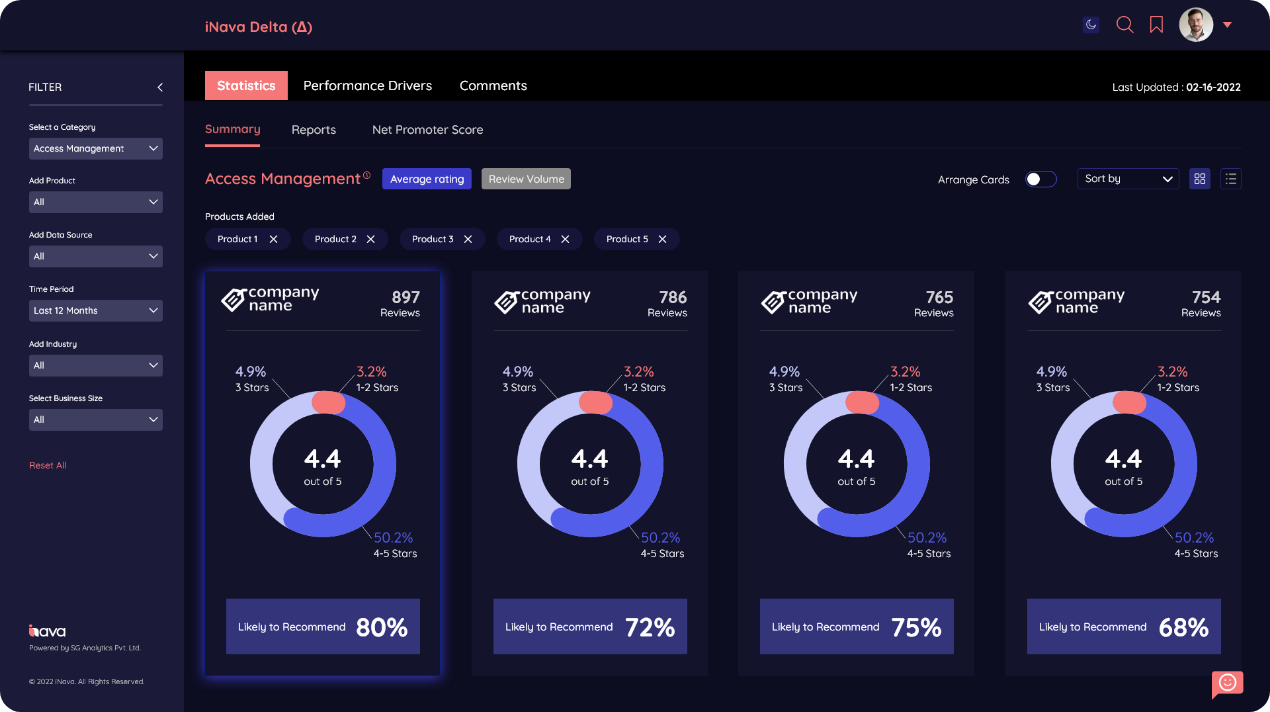
Competitive intelligence, automated.
Our Inava platform tracks competitors, themes, and market signals continuously across more than 1,000 structured and unstructured sources. It converts raw monitoring into structured intelligence feeds for dashboards, advisory narratives, and recurring market views, reducing manual collection and accelerating the insight cycle.
What Inava does
Continuous competitor and theme tracking, market-signal detection across 1,000+ sources, and structured feeds that flow straight into dashboards and advisory work.
Delivered the way leaders consume it.

Executive dashboards
Live views that put the current picture in front of decision-makers.

Benchmark visualizations
Where you stand against the field, refreshed on your rhythm.

Sales battlecards
Field-ready intelligence that helps sales win the next deal.
Studies most vendors said were impossible.
A recurring research franchise across North America, EMEA, and APAC that tracks infrastructure modernization, AI adoption, and vendor positioning wave after wave, giving the client an ownable benchmark the market can return to. See more case studies.
Competitive & Market Intelligence
SG Analytics provides AI-enabled competitive and market intelligence services, including competitor tracking, product teardowns, market sizing, win-loss analysis, and sales battlecards. Powered by its Inava platform, these services help businesses monitor competitive activity, identify emerging market opportunities, benchmark products, and turn market intelligence into actionable strategic decisions.
Competitive intelligence focuses on analyzing competitors, including their strategies, product offerings, pricing, positioning, and market activities. Market intelligence examines broader industry trends, market size, customer needs, and growth opportunities. Together, these approaches help organizations understand their competitive landscape, anticipate market changes, and make informed business, product, and investment decisions.
Businesses should track competitor product launches, pricing changes, partnerships, technology developments, market positioning, and emerging industry trends. Effective competitive intelligence also monitors customer preferences, market signals, and strategic competitor moves. Continuous tracking helps organizations identify competitive threats, discover growth opportunities, and adjust business strategies before market changes affect performance.
SG Analytics uses its Inava platform to automate competitor monitoring, theme tracking, and market-signal detection across more than 1,000 structured and unstructured sources. The platform converts collected information into structured intelligence feeds for dashboards and analysis. Research experts interpret these insights to support strategic planning, competitive benchmarking, and market decisions.
TAM (Total Addressable Market) represents the overall revenue opportunity for a product or service. SAM (Serviceable Available Market) identifies the portion a business can realistically serve, while SOM (Serviceable Obtainable Market) estimates the share it can capture. These market sizing metrics help organizations evaluate growth potential, prioritize markets, and guide investment decisions.
Product teardowns examine competing products to understand their features, technologies, capabilities, and differentiators. Competitive benchmarking compares these findings against market alternatives to identify strengths, weaknesses, and gaps. Together, they help organizations improve product positioning, prioritize development opportunities, understand competitor strategies, and make informed product and technology investment decisions.
Win-loss analysis examines why businesses win or lose deals by evaluating customer feedback, competitor positioning, and purchasing decisions. Sales battlecards translate competitive insights into concise guidance for sales teams, including differentiators, competitor strengths, and objection-handling points. Together, they help refine sales strategies, strengthen competitive positioning, and improve deal preparation.
Businesses can maintain current competitive intelligence through continuous competitor monitoring, automated market-signal tracking, source validation, and regular analyst reviews. AI-enabled intelligence platforms help reduce manual information gathering and identify relevant market changes. Combining automated monitoring with expert interpretation ensures competitive insights remain timely, relevant, and useful for business decisions.
Competitive and market intelligence is delivered through executive dashboards, competitor benchmarking reports, market sizing assessments, sales battlecards, and strategic briefings. These formats help leadership, strategy, product, and sales teams access relevant insights efficiently. Interactive visualizations and recurring intelligence updates support competitor comparisons, market opportunity assessment, and faster decision-making.
SG Analytics combines AI-enabled intelligence gathering with research expertise to deliver continuous competitor and market insights. Its Inava platform monitors 1,000+ sources, while analysts translate market signals into actionable recommendations. Capabilities span competitor tracking, TAM-SAM-SOM analysis, product benchmarking, and win-loss research, supported by recurring multi-region research initiatives.